




 Brunches in egypt
Egyptian culinary history spans over five thousand years, blending ingredients from Mediterranean trade routes and ancient African farming traditions. Experiencing these historical flavors is a vital part of any journey. Discovering the Traditional Egyptian Foods and Drinks Every Traveller Should Try will reshape your understanding of the region.
Local cooking relies heavily on fresh vegetables, legumes, and aromatic spices sourced directly from the fertile banks of the Nile River.
This guide outlines the ultimate collection of Traditional Egyptian Foods and Drinks Every Traveller Should Try to make the most of your culinary journey. Knowing what to order ensures an authentic experience in both bustling cities and quiet desert oases. Street food culture in Egypt is lively, safe, and highly accessible to international visitors who know where to look.
Classic Savory Dishes to Seek Out
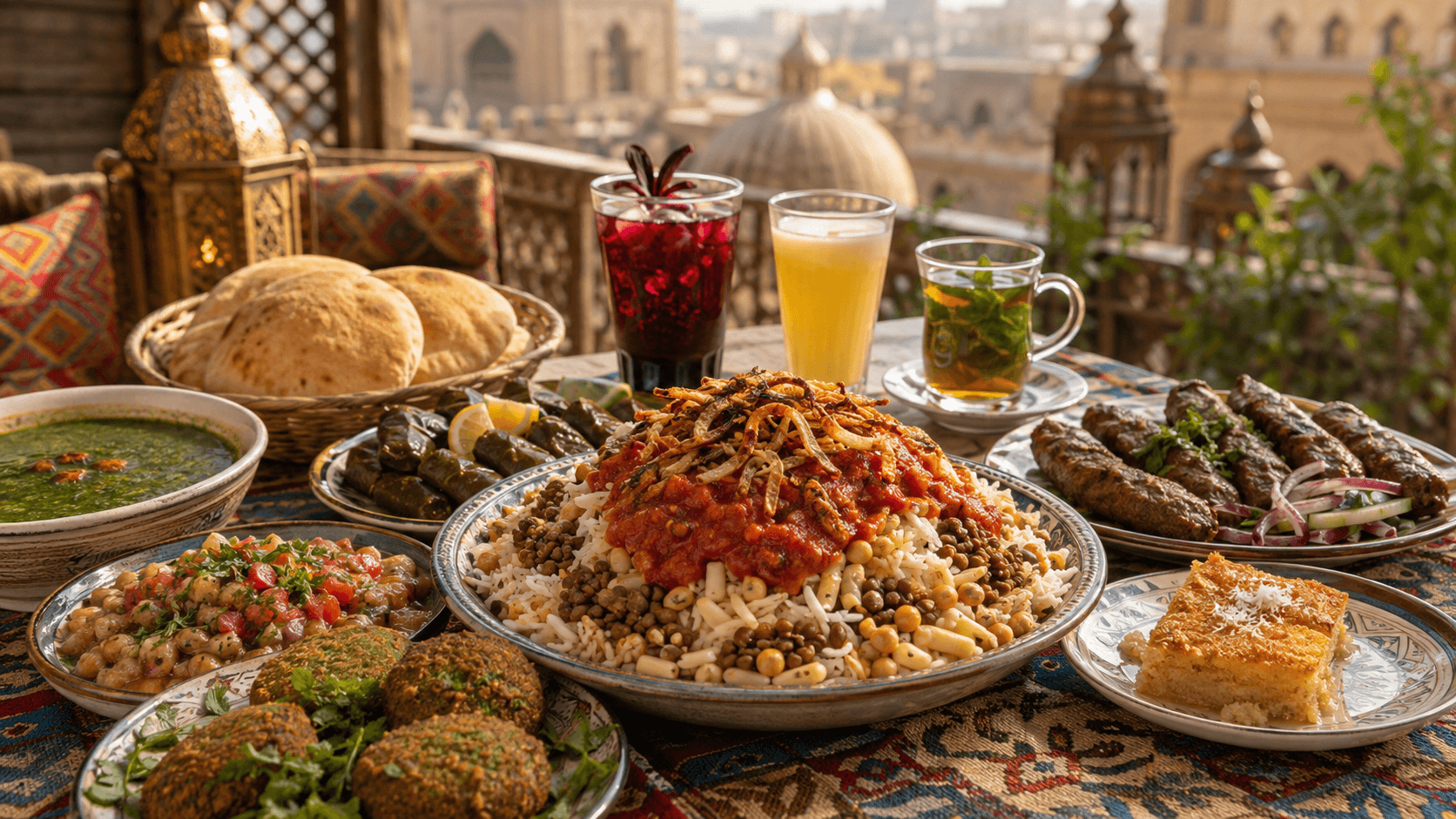
Koshary stands as the ultimate Egyptian national dish. It marries spiced lentils, rice, macaroni, and chickpeas in one bowl. A tangy tomato sauce infused with garlic vinegar and topped with crispy fried onions completes this carbohydrate-heavy masterpiece.
When navigating the bustling streets of Cairo, seeking out Traditional Egyptian Foods and Drinks Every Traveller Should Try will inevitably lead you to a steaming bowl of Koshary.
It is incredibly cheap. A giant bowl costs under two dollars (around 50 to 100 Egyptian pounds) at most local eateries. This simple combination demonstrates how basic pantry staples can become a beloved cultural icon.
Ful Mudammas represents the classic Egyptian breakfast, consisting of slow-cooked fava beans seasoned with olive oil, cumin, garlic, and lemon juice. People have eaten this protein-packed staple since the Pharaonic era, as proven by fava bean remains discovered in Twelfth Dynasty tombs. Starting your day with a hot bowl of slow-cooked fava beans is a daily ritual for millions.
It is typically served with warm, freshly baked Aish Baladi, the traditional Egyptian flatbread. Many locals customize their bowls with chopped tomatoes, onions, or a splash of tahini. This breakfast is one of the classic Traditional Egyptian Foods and Drinks Every Traveller Should Try when waking up in Cairo.
Street Food Icons and Hearty Meats
Ta’ameya is the local version of falafel, crafted with crushed fava beans instead of chickpeas. This swap produces a lighter, fluffier texture and a deep green interior packed with fresh coriander, parsley, and leeks. Street vendors fry these patties fresh throughout the day, coating them in sesame seeds for an extra crunch.
It is typically served inside pockets of flatbread with salad and tahini. Eating it hot on the sidewalk is an experience that belongs on any list of Traditional Egyptian Foods and Drinks Every Traveller Should Try.
Molokhia is a distinctive green soup made from the finely minced leaves of the jute plant, simmered in a rich chicken or rabbit broth. The soup is finished with a sizzling mixture of fried garlic and coriander, known as the ta’sha, which fills the air with an irresistible aroma. This dish has a thick texture that pairs perfectly with white rice and roasted poultry.
It remains a staple of home cooking and festive family gatherings alike.
Kofta consists of minced beef or lamb mixed with spices and grilled on skewers over open charcoal. Hawawshi is another meat-lover’s favorite, featuring spiced minced meat baked inside a whole loaf of Aish Baladi until the bread is crispy. This savory sandwich is a popular quick meal for busy market shoppers.
- Seek out vendors with high foot traffic and long lines of local residents to guarantee freshness.
- Always consume street food that is prepared and cooked directly in front of you.
- Carry small bills of Egyptian pounds to make transactions smooth and efficient.
Traditional Egyptian Beverages to Try
Karkadeh is a deep crimson beverage made from boiled dried hibiscus flowers, served either hot or ice-cold with plenty of sugar. This drink is famous for its refreshing qualities and its ability to help regulate blood pressure in the desert heat. Sipping on cold Karkadeh during a hot afternoon highlights why herbal infusions are key Traditional Egyptian Foods and Drinks Every Traveller Should Try.
It is often offered as a welcoming gesture in local shops and hotels.
Tea is the ultimate social drink in Egypt, typically served in small glasses and heavily sweetened. You can order it Koshary style, where loose tea leaves are steeped directly in boiling water, or Saiidi style, which is boiled for a longer time to create a strong, bitter brew. Fresh mint leaves are frequently added to enhance the flavor profile.
It accompanies almost every social interaction and business transaction in the country.
Asab is freshly squeezed sugarcane juice, processed through giant pressing machines right on the street. It is a sweet, light green liquid that provides an instant energy boost during long sightseeing tours. It must be consumed immediately after pressing before it oxidizes and loses its bright flavor.
Sweet Treats of the Egyptian Pastry Shops
Basbousa is a moist semolina cake soaked in sweet syrup and often garnished with almonds or coconut flakes. Sweets also form a major part of this list, and finding authentic semolina cake shows the depth of Egypt’s traditional dessert heritage. The texture is dense yet delicate, melting quickly on the tongue.
It is a staple dessert at celebrations and family dinners.
Umm Ali is the Egyptian version of bread pudding, made with layers of puff pastry, milk, sugar, raisins, coconut, and almonds, baked until golden brown. The name translates to Mother of Ali, referencing a historical tale from the Mamluk era. It is served hot and remains one of the most beloved comfort foods in the country.
It offers a rich, creamy finish to any heavy meal. Many consider this dessert a highlight among the Traditional Egyptian Foods and Drinks Every Traveller Should Try.
Kunafa features thin, noodle-like pastry strands layered with sweet cheese or cream, baked to a crispy golden hue, and drenched in simple syrup. It is especially popular during the holy month of Ramadan, when pastry shops compete to create new fillings.
- Cumin provides the earthy, warm backbone for savory bean dishes and street foods.
- Coriander is toasted and ground to create the fragrant base for soups and meat marinades.
- Cardamom adds a sweet, floral aroma to traditional Arabic coffee and slow-cooked stews.
How to Order and Enjoy Local Culinary Specialties
Navigating local eateries requires a basic understanding of dining customs and menu layouts. Most traditional restaurants specialize in specific dishes, so a Koshary shop will rarely serve grilled meats or seafood. It is best to visit specialized establishments to experience each dish at its absolute highest quality.
Knowing these tips will help you enjoy the Traditional Egyptian Foods and Drinks Every Traveller Should Try without any hassle.
To help you plan your dining itinerary, here is a quick reference table of popular local items:
| Dish / Drink | Type | Key Ingredients | Best Time to Enjoy |
|---|---|---|---|
| Koshary | Savory Main | Lentils, rice, macaroni, chickpeas, tomato sauce | Lunch or Dinner |
| Ful Mudammas | Savory Main | Slow-cooked fava beans, olive oil, garlic, lemon | Breakfast |
| Karkadeh | Beverage | Hibiscus flowers, water, sugar | Hot Afternoon |
| Umm Ali | Dessert | Puff pastry, milk, sugar, nuts, raisins | Evening Comfort |
To help you plan your dining itinerary, here is a list of recommended meal pairings:
- Pair morning Ful Mudammas with fresh falafel, pickled eggplant, and hot Aish Baladi.
- Follow a hearty lunch of Molokhia and rice with a refreshing glass of cold Karkadeh.
- End a grilled meat dinner of Kofta and Kebab with a small slice of Basbousa and hot mint tea.
Starting Your Culinary Adventure in Egypt
Exploring the diverse culinary landscape of the Nile is a journey through history, culture, and community. Every bite of spiced street food and every sip of sweet herbal tea tells a story of ancient traditions preserved through generations. Embracing the rich culinary heritage of the Nile valley guarantees a deeper connection to the local culture.
Prepare your palate for bold spices, rich textures, and warm hospitality as you explore this historic land.


Comments are closed